Narreme is a set of tools I build for my PhD thesis.
The tools are based on a set of techniques based on narratology to help users analyze and make sense of the qualitative data they have collected and to communicate the information and knowledge they extract from the data though narratives.
The toolset is based on two techniques: clustering and conflict discovery, that are traditionally used in fictional narratives but can also be applied to non-fiction.
The toolset consists of three tools:
(a) Narreme clustering tool which helps a user organize her thoughts and identify supporting qualitative data consisting of images and text for her narratives,
(b) Narreme conflict discovery tool helps the user better understand where conflict could be introduced in her narratives, and,
(c) Narreme video editing tool which is used to create a video slideshow narrative and adjust the order based on a narrative tension curve.
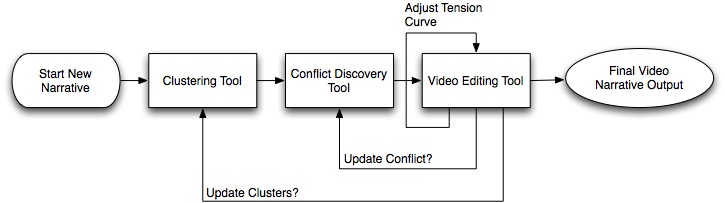
The flow diagram below shows how a user can go about creating a narrative with participatory sensing data.
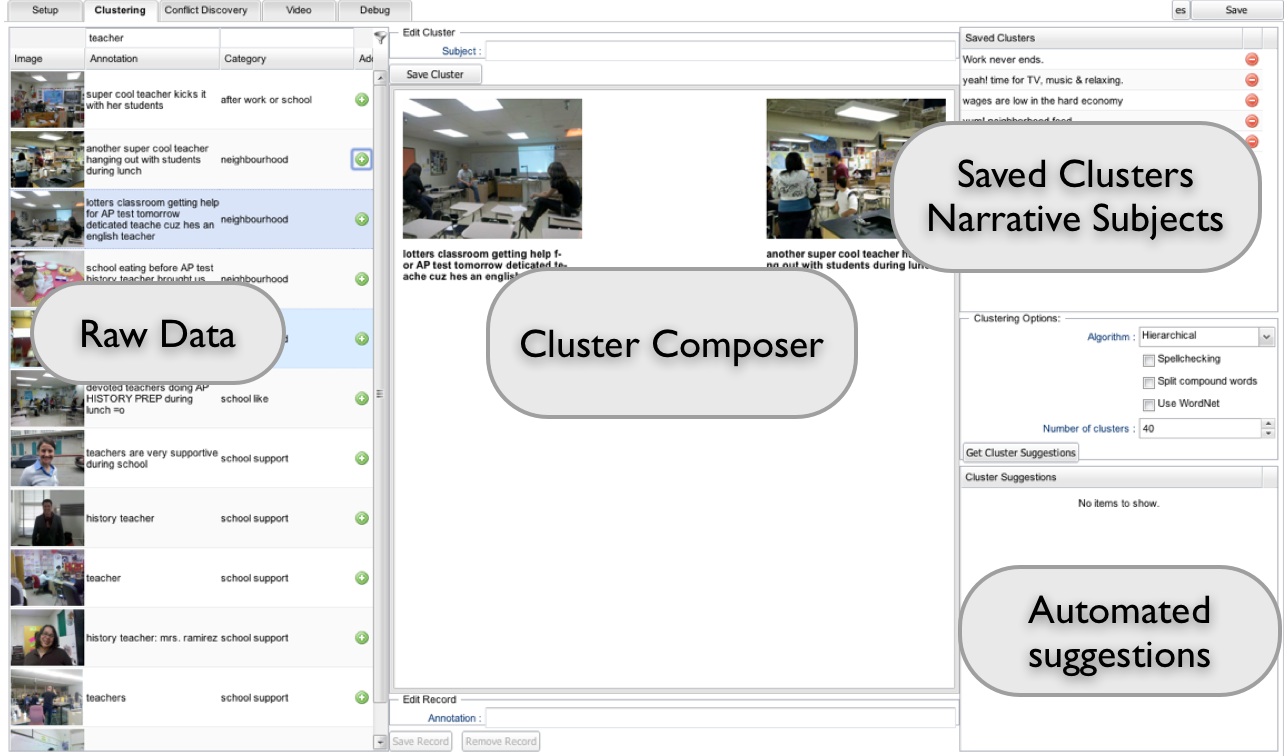
Clustering Tool
– Identify the main subjects the narrative is going to present.
– Find clusters of data elements for each subject
– Automated clustering tools provides suggestions. Based on text analysis and using the WordNet database.
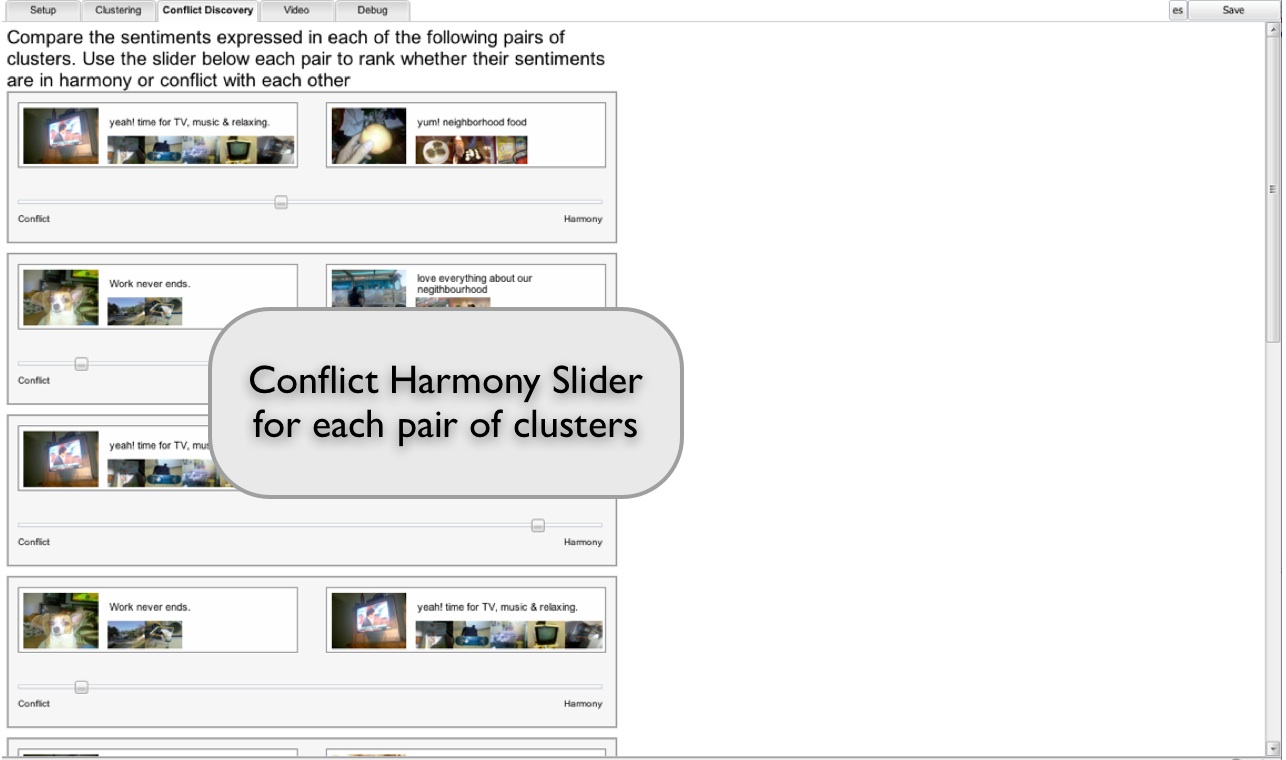
Conflict Discovery
– Compare emotions expressed for each pair of clusters and determine if they are in conflict or harmony.
– Automated NLP sentiment analysis is used to seed initial conflict harmony values that users can manipulate.
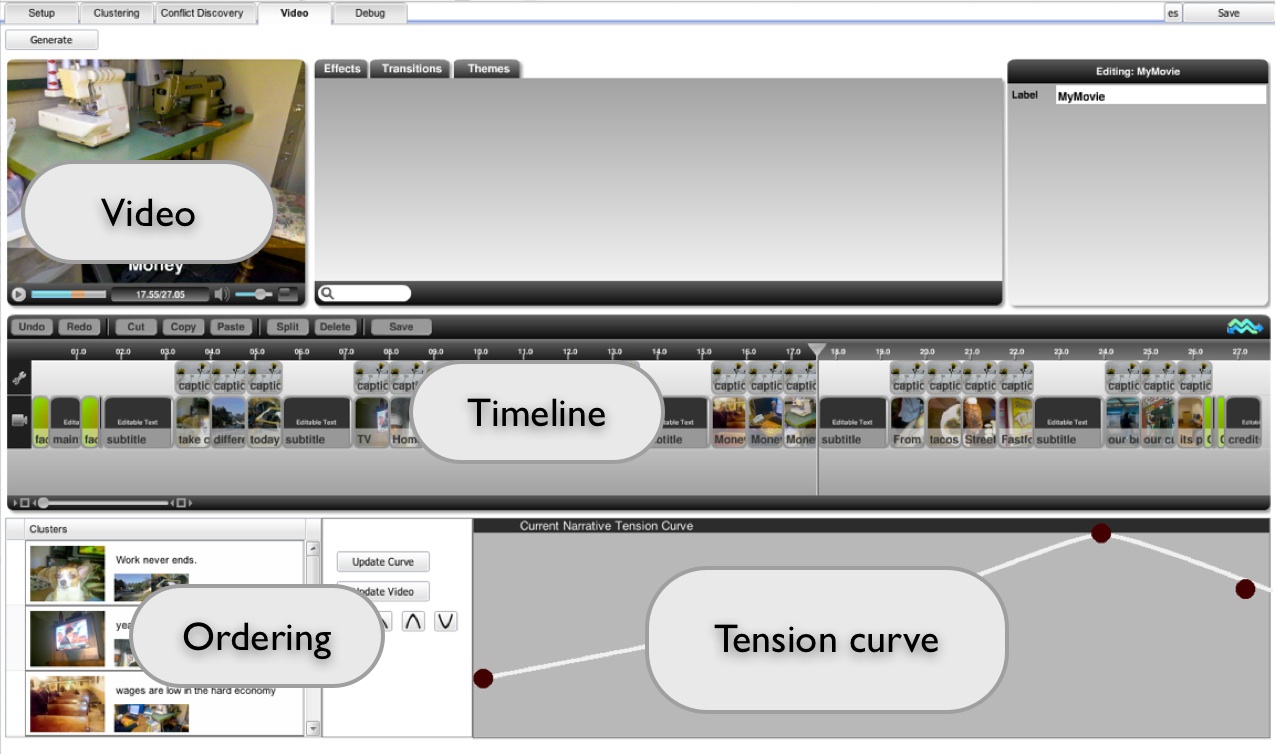
Narrative Video Creation
– Automatically create a video slideshow on a timeline with data from the clusters.
– Presents a tension curve for the narrative.
– Users can manipulate the tension curve to change the ordering of clusters in the narrative to find one that is most engaging.
For more information you can see the entire thesis manuscript here.
 Vids Samanta